
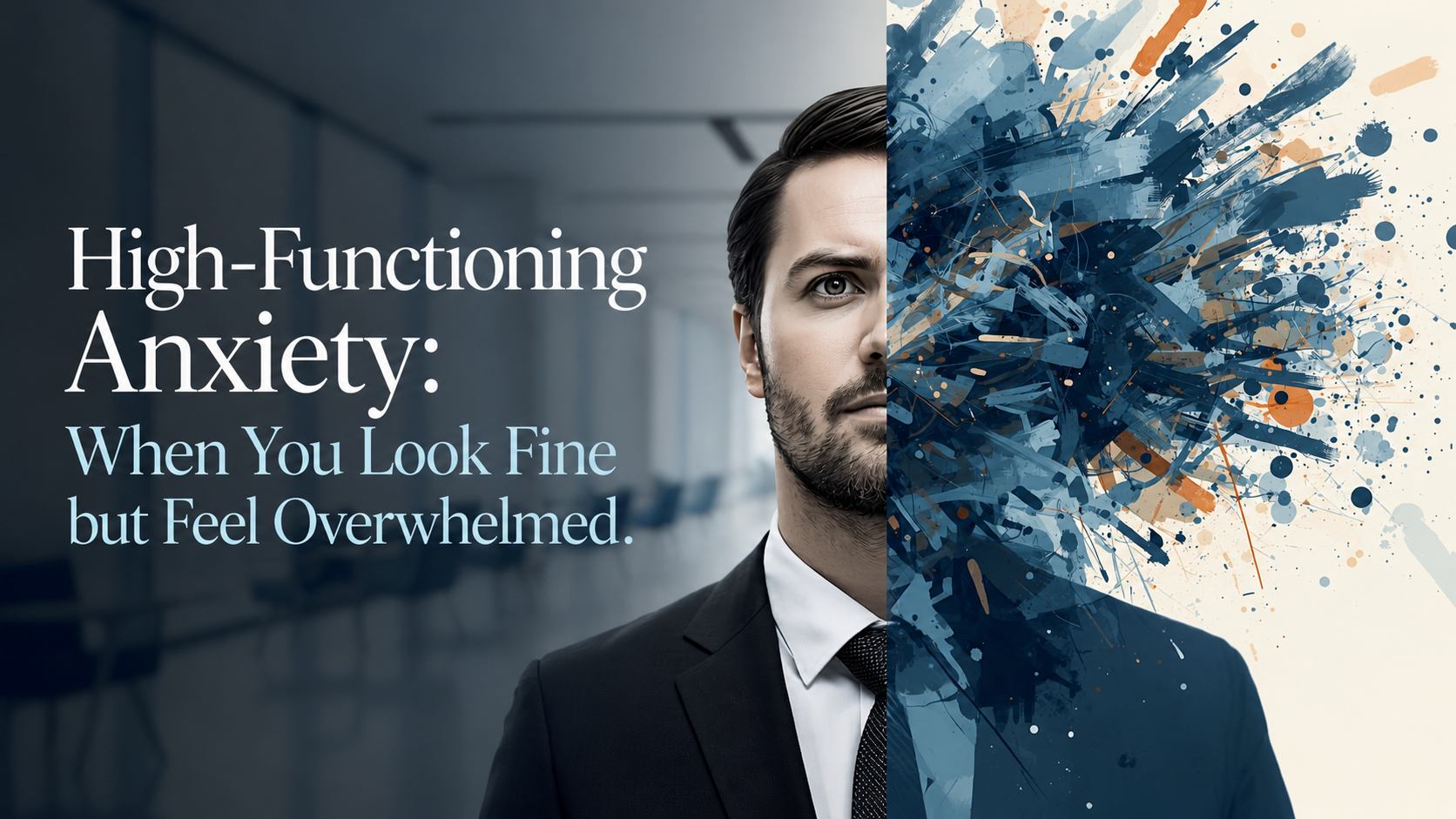
But there could be another individual who looks peaceful, efficient, and controlled from the outside. But within, he or she is going through stress, restlessness, and mental fatigue. The existence of high-functioning anxiety may not become apparent because of the inner struggle that remains well-hidden behind normal activities and achievements.
The following paper tries to analyze the phenomenon of high-functioning anxiety, signs of anxiety, the effects of the disorder in both professional and personal life, solutions, and when to seek professional help.
What is High Functioning Anxiety?
High functioning anxiety is a term often used when one fulfills their obligations well enough but faces certain inner anxiety, stress, or fear regularly.
One may seem like a high-functioning person: well-organized and successful. One can do great in various areas: at work, in study, and in household chores as well. Nevertheless, one may face challenges with constant worry or even stress.
At times, people hide their anxiety by being productive or having more obligations than they should have. One may work themselves to the bone despite exhaustion.
It should be noted that the phrase “high-functioning anxiety” is widely used. However, it is not a formal diagnosis and may describe people who experience significant anxiety while continuing to function in everyday roles.
Signs of High Functioning Anxiety
Indications of anxiety are not necessarily obvious. Certain forms of concealed anxiety may be observed in the guise of productivity, discipline, or perfectionism.
Common signs may include:
- Constant overthinking
- Fear of making mistakes
- Perfectionism
- Trouble relaxing
- Restlessness
- Irritability
- Problems with sleeping
- Muscle fatigue and tension
- Overpreparing or double-checking everything
- Saying “yes” too often to avoid disappointing others
- Feeling mentally tired even after completing daily tasks
- Feeling worried even when things are going well
Understanding anxiety symptoms can help a person recognise when ongoing worry or stress may need professional attention.
Why Can High-Functioning Anxiety Be Hard to Notice?
High functioning anxiety can be difficult to detect because the individual will continue to meet their obligations.
They might seem like they are performing well. They can get their work done in time, assist people, and get things done. This doesn’t necessarily imply that they’re feeling fine within.
There are cases when their anxiety will resemble their ambition, discipline, and busy schedule. Additionally, they become used to stress and neglect themselves emotionally.
This may be caused by the feeling of guilt since everything seems to be fine.
How High-Functioning Anxiety Can Affect Daily Life
It can be manifested through work, studying, relations, sleeping problems, or physical wellbeing. Its consequences may accumulate gradually. Persistent anxiety that begins to interfere with everyday activities may warrant a professional assessment.
At Work or Studies
Work anxiety can cause an individual to overwork, overthink, or be anxious despite doing everything perfectly well.
He or she may have to keep up constantly. This person fears failure or cannot afford any mistakes.
Some individuals find it difficult to stop working or studying even outside of their regular working hours. No matter how successfully tasks are accomplished, they may feel uneasy and nervous.
Persistent anxiety can also affect daily functioning, including work, study, sleep and relationships.
Personal Life
High-level anxiety affects emotional presence.
One might be tired mentally after performing daily activities. One might be irritated or depressed. It is also difficult for one to relax since they experience guilt while doing so.
There will be stress within the relationships when the mind of the person is preoccupied. In such a situation, the person may be physically present but not emotionally there.
In Physical Wellbeing
Anxiety can also affect the body.
Common physical effects may include:
- Poor sleep
- Headaches
- Fatigue
- Muscle tension
- Digestive discomfort
- Low energy
These symptoms may develop as a result of ongoing stress.
What Causes or Contributes to High-Functioning Anxiety?
High-functioning anxiety cannot be attributed to just one reason. Various reasons can lead to this condition.
Some of them are listed below:
- Perfectionist nature
- Constant stress
- Need to succeed
- Fear of being judged
- Experiences
- Setting high standards for oneself
- Unpredictability
- Chronic worrying behavior
- Not getting enough rest
- Problems establishing boundaries
In some cases, this form of anxiety develops gradually. In other cases, the intensity of anxiety increases in response to certain events in one’s life.
What Helps with High Functioning Anxiety?
There are some small things that could help with high functioning anxiety and how to cope with it. It is not necessary to force you to stop worrying since you need to build new ways to deal with anxiety.
These things might be helpful:
- Identifying patterns of worry and stress
- Develop realistic personal standards
- Practice saying no
- Having short breaks from time to time
- Doing grounding and breathing exercises
- Lessening overstimulation
- Getting proper sleep
- Talking to somebody
- Changing perfectionistic thoughts
- Getting professional help in case of symptoms persisting
High-functioning anxiety could be treated in many ways, such as therapy, changing life patterns, coping mechanisms, and getting professional mental help.
When Should You Seek Help?
Here are some circumstances in which seeing a mental health expert would benefit you.
You can seek help if:
- Anxiety feels constant
- Anxiety affects sleep
- Anxiety affects focus or performance
- Anxiety causes emotional exhaustion
- Anxiety affects relationships
- Overthinking affects daily wellbeing
- Physical symptoms become frequent
- It becomes harder to cope, even when life still “looks normal”
You are not showing weakness by asking for help. You are taking care of yourself.
Frequently Asked Questions
1. Is high-functioning anxiety a formal diagnosis?
No. “High-functioning anxiety” is a commonly used term for people who may experience significant anxiety while continuing to manage work, studies, relationships or daily responsibilities. It is not a formal standalone psychiatric diagnosis. A mental-health professional can assess whether the symptoms are related to an anxiety disorder or another concern.
2. What are the common signs of high-functioning anxiety?
Common signs may include excessive overthinking, perfectionism, difficulty relaxing, restlessness, fear of making mistakes, irritability, sleep problems, muscle tension, frequent reassurance-seeking and feeling mentally exhausted even when daily responsibilities are being completed.
3. Can someone have anxiety and still function well at work or in daily life?
Yes. A person may continue to meet deadlines, perform well at work or studies, and appear organised while experiencing significant worry or emotional strain internally. Looking productive or successful does not necessarily mean that a person is free from anxiety.
4. Is high-functioning anxiety the same as generalized anxiety disorder?
Not necessarily. High-functioning anxiety describes how anxiety may appear in someone who continues to function well externally. Generalized anxiety disorder is a specific clinical diagnosis involving excessive and difficult-to-control worry across different areas of life, with symptoms occurring over a sustained period and affecting functioning.
5. Can high-functioning anxiety affect sleep and physical health?
Yes. Ongoing anxiety can be associated with difficulty sleeping, fatigue, headaches, muscle tension, digestive discomfort and other physical symptoms. Persistent symptoms should be discussed with a qualified healthcare professional, especially when they interfere with daily life.
6. How is anxiety treated when someone appears to be functioning normally?
Treatment depends on the person’s symptoms, underlying concerns and clinical assessment. Psychological therapies such as cognitive behavioural therapy may be helpful, while medication may be considered when clinically appropriate. Lifestyle measures such as regular sleep, exercise, stress management and healthy routines may also support recovery.
7. When should I seek professional help for anxiety?
Consider seeking professional help when anxiety feels persistent, affects sleep or concentration, causes emotional exhaustion, interferes with relationships or work, produces frequent physical symptoms, or becomes increasingly difficult to manage. An assessment can help identify the problem and guide the next steps.
Conclusion
Having an excellent appearance on the outside does not necessarily mean that one’s life is great on the inside. Anxiety can become a continuous state of being; therefore, one needs to take care of themselves by getting proper rest and treatment for it.
One can receive help for anxiety at Ahana Hospitals from professionals in the field who realize that anxiety cannot always be seen and that one’s life matters.
If one’s anxiety prevents them from living their lives normally, one should look for help to get to know more about themselves.
Author’s Bio
Medical Reviewer: Dr. Vikhram Ramasubramanian, MD – General Medicine, MD – Psychiatry
Dr. Vikhram Ramasubramanian (MD – General Medicine, MD – Psychiatry) is a Consultant Psychiatrist at Ahana Hospitals. This article has been reviewed by Dr. Vikhram Ramasubramanian from a clinical perspective and for accuracy of information provided herein. The content of this article is meant to be used for educational purposes only and is not a substitute for professional medical care.
Medical Disclaimer
The information provided in this article is meant to be educational and does not serve as a substitute for professional advice, diagnosis, or treatment by a licensed medical practitioner in case of depression.