
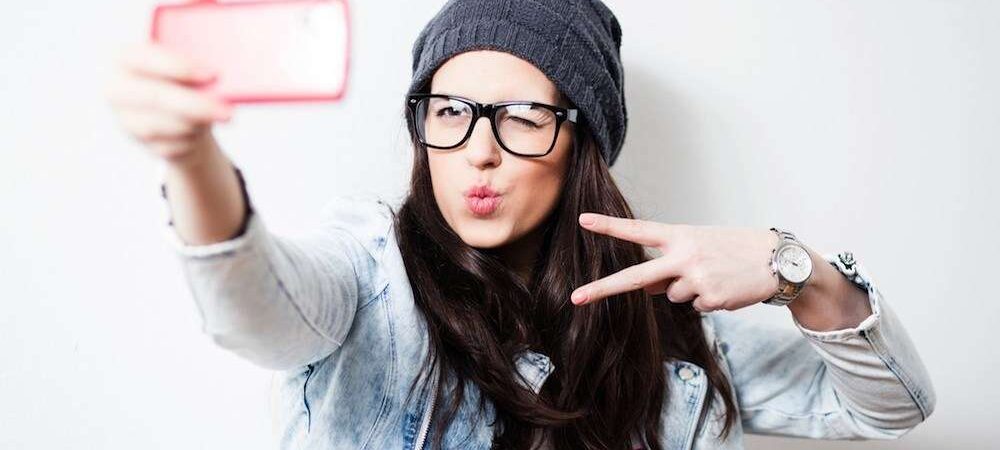
It doesn’t need a definition. Everybody knows what it means. People young and old find it interesting and fun to take selfies and share them with people. The culture is so popular that most smartphones advertise their selfie camera rather than their internal storage capacities. Numerous apps are available to get that perfect selfie shot with interesting filters and fun modifications. Social media is flooded with selfies every day.
Recent studies have reported that young millennials enjoy selfies and may post them from novel settings that can sometimes be dangerous. Normal routines, important events, and vacations are instantly shared on social media with selfies.
Selfie Addiction / Selfitis
Most of us do not like to use the term. We find it degrading. We all take selfies and we all love to upload them on social media, so what’s wrong with it?
Psychologists have been intrigued by the rising selfie trends: duckface pout, no-filter selfie, migraine shot, bedfie, model pout, mirror shots, fish gape, found-my-light shot, kissy face, I-am-bored shot, and many more. Every week, numerous trends emerge and are copied by millions around the world. Researchers have been trying to understand why people like to take selfies and upload them on social media, often with the intention of sharing them and getting likes and comments.
Many people do not even realize that photos once uploaded on any media platform may be difficult to fully remove and can potentially be copied or misused by others. Imagine a photo taken during a fun party coming back later to disrupt a relationship or affect career prospects.
Psychological and behavioural factors that may contribute to excessive selfie-taking include:
To Increase the Mood
A person may take a selfie because they are feeling low and want to make themselves smile. Receiving likes and comments may provide temporary positive feelings.
An Intense Sense of Self-Importance
Some people like to upload selfies in different modes and settings to gain online popularity. In the age of instant news and social media, many people have the opportunity to receive significant online attention.
Low Self-Esteem
Some individuals with low self-esteem may upload more selfies in an effort to receive validation or appreciation from others and feel better about themselves.
To Conform with the Group / Social Competition
Most adolescents and young adults indulge in selfie-taking because their friends do it and it is a current trend. They may want to feel part of their peer group and avoid feeling isolated.
Some people like to document every moment of their lives through selfies. This can lead to comparisons over the number of likes and comments received for each photo.
This may create a version of life online that appears entirely fun and enriching, while the person’s actual experience may be very different.
When excessive online behaviour begins to affect self-esteem, relationships, or daily functioning, psychological assessment and therapy may help identify underlying concerns.
For adolescents whose social-media or selfie-related behaviour affects school, relationships, or emotional well-being, child and adolescent psychiatry can provide age-appropriate assessment and support.
Think Before You Upload
So, what is your reason for taking that photo?
Think twice before you upload it on social media. Consider why you are sharing it, how often you are posting, and whether social-media activity is affecting your daily life, relationships, or emotional well-being.
Research has examined excessive selfie-taking and related behaviours in young adults. Research on selfie-related behaviour has explored factors associated with repeated selfie-taking and social-media validation.
Social media can have both positive and negative effects, depending on how it is used and the individual’s circumstances. APA guidance on adolescent social media use provides recommendations for healthier social-media use among young people.